Discussion Questions for Celestial Mechanics
Our featured book, The Lady's Guide to Celestial Mechanics by Olivia Waite, gives a book club plenty to talk about: two women whose talents the world refuses to see, a scientific society that would rather not let them in, and a love story that grows out of shared work. These questions are written for groups who have finished the book, so expect spoilers.
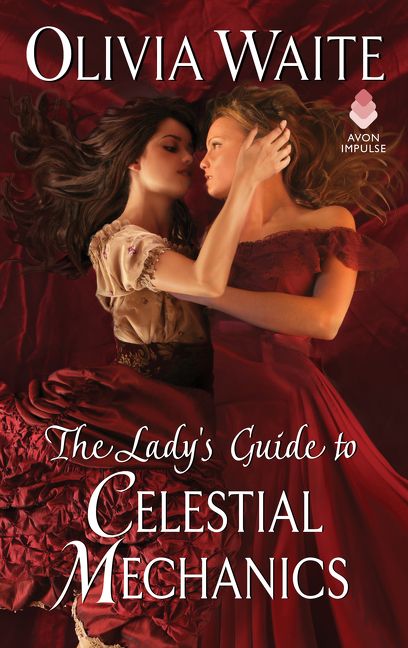
About the book
Published in 2019, The Lady's Guide to Celestial Mechanics is a sapphic historical romance set in Regency England and the first of Waite's Feminine Pursuits novels. Lucy Muchelney, an astronomer, has spent years doing work that went out under her late father's name. When Catherine St. Day, the widowed Countess of Moth, writes to him looking for a translator for an important French work of astronomy, Lucy goes to London to offer herself instead. Catherine is an embroiderer of real talent who has never been encouraged to think of her needlework as art. What follows is a story about work, recognition and two women learning what they are allowed to want.
How to use these questions
- Pick five or six that suit your group. Good conversations rarely get through more.
- Start with the warm-up questions, then let the group choose a theme.
- Questions marked with a star make good closers.
Warm-up
- What was your first impression of Lucy? Of Catherine? Did either of them change for you as the book went on?
- Which scene would you choose to read aloud to someone who has never read a romance?
- Was this your first sapphic romance, or your first historical romance? What surprised you?
Work, credit and recognition
- Lucy's calculations were published under her father's name. How does the book show the cost of doing work that someone else takes credit for?
- Translation is at the center of the plot. Why do you think Waite chose translation, rather than original discovery, as Lucy's way into the scientific world?
- How do the members of the Polite Science Society respond to the idea of a woman doing serious science? Do any of their arguments sound familiar today?
- Lucy and Catherine support each other's ambitions in practical ways. What does the book suggest about the difference between admiring someone's talent and making room for it?
Art and science
- Catherine dismisses her embroidery as "not really art". Why does she believe that, and what changes her mind?
- The book places needlework and astronomy side by side. What do they have in common? Where do they differ?
- Who decides what counts as art, and what counts as science, in the world of the novel? Who decides now?
Grief, marriage and freedom
- The book opens with Lucy's heartbreak as her former lover marries a man. How does that loss shape the way she approaches Catherine?
- Catherine's marriage was not a happy one. How does her widowhood give her freedoms that other women in the novel lack, and where does that freedom stop?
- On our home page we quote a line from the novel about being tired of "bending this way and that" in search of approval. Where in the book do characters bend themselves to fit, and who finally stops?
- How do family members, Lucy's brother among them, help or hinder the two women?
The love story
- Lucy and Catherine fall in love while working side by side. How does shared work change the way a romance develops?
- Late in the book, a misunderstanding drives the two apart. Did it feel earned to you, or would you have written it differently?
- Romance promises an emotionally satisfying ending. How does Waite deliver a happy ending for two women in a society that would not have recognized their relationship?
- Which secondary character would you most like to read a book about, and why?
Romance as a genre
- Did reading this book change how you think about historical romance? About romance in general?
- The novel is very interested in who gets taken seriously. How might that connect to the way romance novels themselves are often dismissed?
- ★ If you could hand this book to one person in your life, who would it be?
- ★ What would you like to read next as a group?
Before the meeting
A little preparation helps the host as much as the group. Send a reminder a few days ahead with the date, the place and a gentle note that the conversation will include the ending. Choose your questions in advance and print a copy or two for people who like to read along. If your group is large, split into smaller circles for the middle part of the evening and come back together for the closing questions.
For groups that want to go further
- Look up the stars. If your meeting is in the evening, take five minutes to step outside and see what is visible. It is a lovely way to end the night.
- Bring needlework. If anyone in your group embroiders or stitches, ask them to bring something to show. It adds a lot to the conversation about Catherine.
- Read the series. Olivia Waite continued Feminine Pursuits with The Care and Feeding of Waspish Widows and The Hellion's Waltz. Our list of queer historical romance worth picking up has more ideas.
Still need a copy? See Get the Book, and if your group meets at an independent bookstore, buy it there. You can find other readers on our participating groups page, and our guide to starting a romance book club in your town covers the rest. Do not forget the brownies.